In February 2026, there are 16,800+ apps in the Shopify App Store. But how many apps are generating a handsome amount of revenue?
Maximum 25-30%, or even less.
Most Shopify apps don’t fail because of development issues. But they fail because lacking Shopify app marketing; nobody finds them.
On the Shopify App Store, 80% of partners have only 1 app on their accounts, and most are indie developers.
They know how to build a good Shopify app, but they don’t know market the Shopify app. So that merchants can discover their app.
As a result, installs stay flat, traffic is zero, reviews don’t come in, weeks pass, and growth feels slow and frustrating. Their app stays invisible. If you are also struggling to bring traffic and install on your app, you’re in the right place.
Things change when you treat marketing like a system, not luck. The right app marketing strategy helps you rank higher on the Shopify app store, attract the right merchants, and convert more installs. Sometimes a small optimization can double your app’s installation rate. Smart content can bring traffic daily.
In this guide, I’ll show you proven, step-by-step Shopify app marketing strategies I’ve used in many successful projects. If you follow these strategies, you can grow installs, build authority, and 3X your Shopify app growth.
Brainstorm Shopify App Marketing Strategy (Market, Niche & Positioning)
Before starting your app marketing, you need to be clear about your app market, target niche, and your app position. If you fail to position your app in the right spot, merchants will never use your app, even if you can solve their problems.
Many app founders or developers launch their app and expect installs automatically. But without a clear strategy, your app gets buried. No visibility. No clicks. No installs.
That’s why you should understand and build a Shopify app marketing strategy before promotion. First, define your market. Then choose a niche. Finally, position your app clearly.
When this foundation is strong, everything becomes easier:
- SEO ranks faster.
- Ads cost less.
- Copy converts better.
- Plant (app) grows naturally.
Let’s break it down.
Identify Your Shopify App Category & Niche
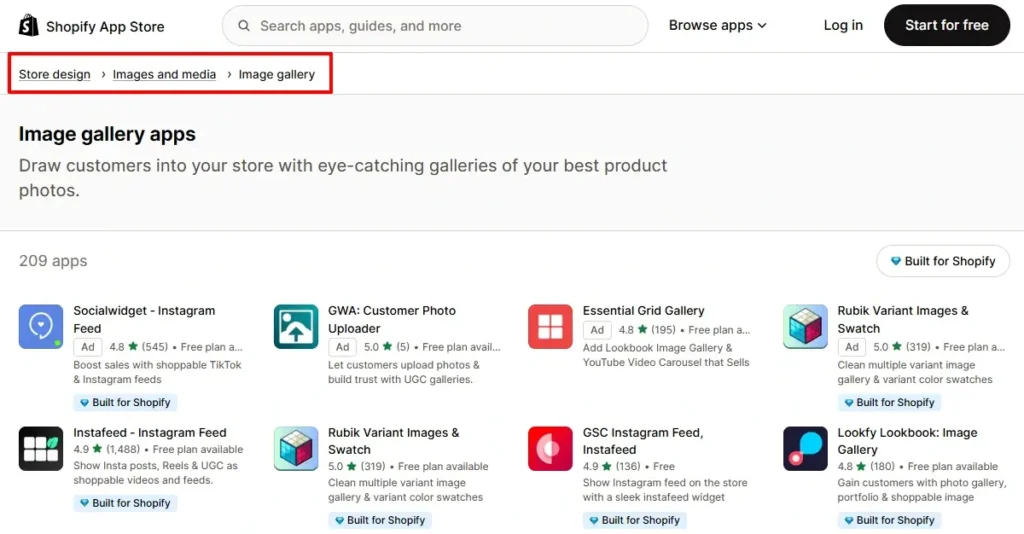
The Shopify App Store has thousands of apps competing for attention. If your app targets “everyone,” it will reach no one. Because broad positioning makes your message weak and forgettable.
Merchants search for specific solutions, not generic tools. They search like: “email marketing for small stores”, “Upsell app for activewear brands”, etc.
This is why niche matters.
Instead of saying “the best email marketing app,” say “Email marketing for dropshipping beginners.” A focused niche helps you to reduce competition by narrowing down the market. Also, helps to rank faster in the App Store, write sharper copy, and attract high-intent users.
The more specific you are, the easier growth becomes.
Understand Merchant Pain Points
In the previous step, you have identified your target market and potential customers who might use your app. Now it’s time to analyze those merchant’s pain points, their problems, their frustrations.
Because merchants will never pay you for your amazing app, they are willing pay to solve their problems. They don’t care about your AI, APIs, dashboards, or heavy technology. They only care about their store’s problems and the results.
In this stage, your job is to understand what frustrates them every day. Look for pains that your app can solve, like low traffic, page speed, low conversions, broken tracking, etc.
You can connect with your target merchants in Facebook groups, Reddit communities, and Shopify forums.
Pro Tip: You can also analyze positive and negative reviews of your competitor’s app. There, you will get ideas about which problems are facing merchants, and why they are paying for.
Analyze Competitor App Listings
Look for apps in your same category, and try to find out what they are doing. They already did months of A/B testing and are growing. So, their listings show you what actually works and what doesn’t. Instead of guessing, study them carefully.
First, open the top 10-15 Shopify apps in your category. Then notice patterns in how they present themselves.
Pay attention to:
- App names, app cards, and subtitles.
- Keywords they repeat.
- Screenshots layout.
- Pricing structure.
- Reviews and complaints.
If multiple apps use the same keywords, those likely drive traffic. If users complain about something repeatedly, that’s your opportunity.
Competitor research saves time and prevents costly mistakes. Smart Shopify app marketing always starts here.
The Gap Analysis Strategy from Competitors
A gap is where merchants need something, but competitors failed to deliver well. This is where small apps can beat big players. You don’t need to be better at everything. You only need one clear strength.
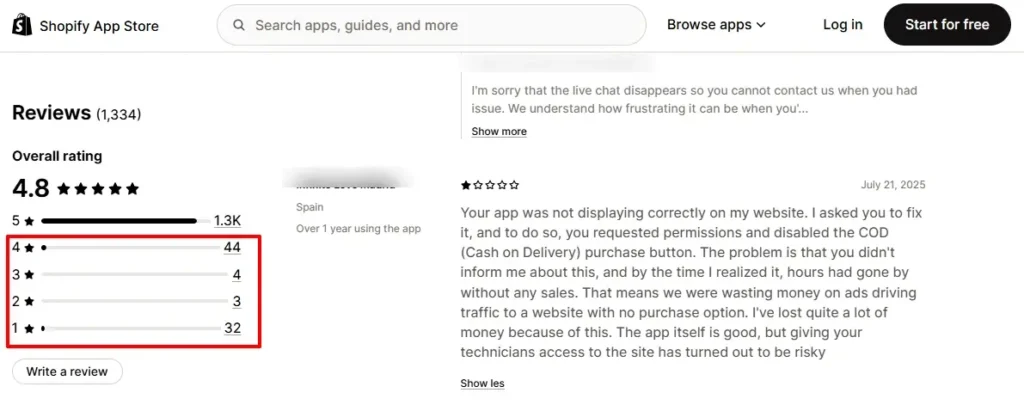
Go to the “All Reviews” section of those 10-15 apps that you have opened in the previous steps. Then filter out all 1-star, 2-star, and 3-star reviews of unsatisfied merchants. Now analyze all complaints like complicated setup, confusing UI, poor customer support, no beginner guidance, etc.
For example, if competitors offer complex or advanced features, position your app as “simple and beginner-friendly.”
These small differences can create big wins. Clear positioning makes merchants choose you faster.
Define Your Unique Value Proposition (UVP)
Your unique value proposition will help you to stay one step ahead of all competitors. It tells merchants exactly why they should install your app instead of others. If your message is generic and vague, it couldn’t attract attention or merchants.
Here is exactly how you can define the unique value proposition (UVP) to find out the unique selling point (USP):
- Keep the Shopify app marketing message short.
- Keep the message or copy very specific.
- Make the content easy to understand in seconds.
- Write the listing page copy benefit-focused.
- Avoid technical language, speak about results.
Use this simple formula: “[your app] helps [who] achieve [result] without [pain].“
Examples:
- Help small stores recover abandoned carts automatically
- Increase AOV without complex funnels
- Track pixels without touching code
When your UVP is clear, everything will improve, whether it is SEO, ads, conversions, installs, or revenue.
Shopify App Store Optimization Strategy (ASO for More Visibility & Installs)
The Shopify App Store is the most effective source of your Shopify app marketing funnel. Thousands of merchants visit this platform to discover apps to install in their stores. So, if you can display your app in front of the merchants, you will get 10-20 users per day, completely for free.
The Shopify App Store works like a search engine. Merchants type keywords, browse results, and install what looks trustworthy. If your app is not optimized, it stays invisible. No matter how good your product is, people simply won’t find it.
That’s why ASO matters for your app marketing. It helps your app rank higher, get more clicks, and increase installs without spending on ads. With the right keywords, copy, and visuals, your listing becomes a silent salesperson working for you 24/7.
Here is how you can optimize your app store listing page to rank higher and get more installs for free:
Keyword Research for Shopify App Store
Keyword research is the foundation of Shopify app store listing page optimization. Merchants often visits Shopify app store and search specific phrases like “bundle app,” “upsell app,” “page builder,” or whatever they need. If your app doesn’t include those terms, Shopify won’t show your listing.
That’s why you need to know how to research keywords for Shopify app marketing. Start by checking app categories, search suggestions, and competitor listings. Then identify high-intent words that clearly describe your solution.
The right keywords not just bring more traffic, but also bring more qualified users, which helps to boost app revenue!
Optimize App Name, App Card & Keywords
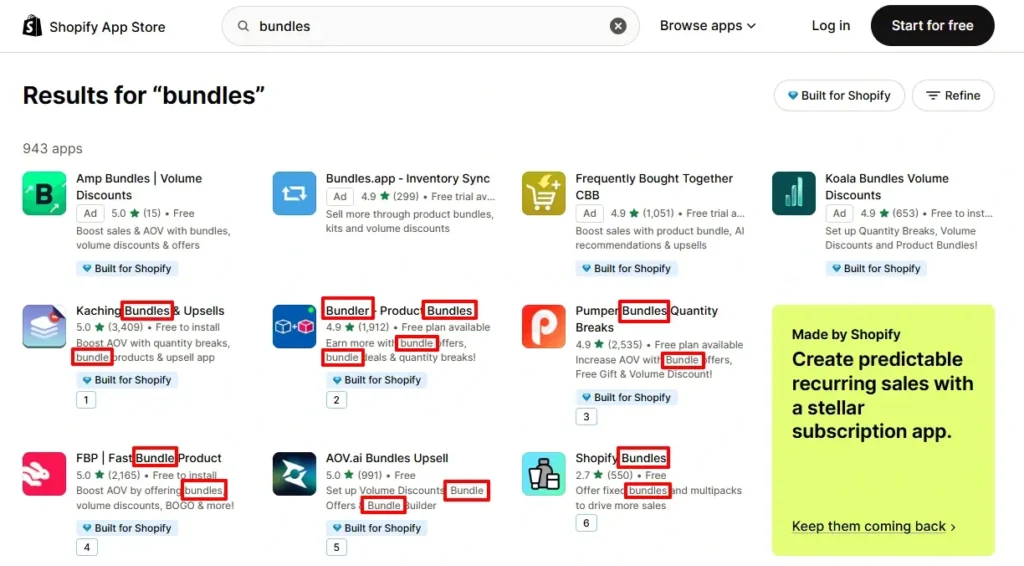
You have 30 characters to write your app name on the Shopify app store. This app’s name is the most powerful ranking signal to the Shopify app store.
You may have noticed that most of the successful apps add their primary keywords to the app name field. For example, JudgeMe is the most revenue-generating app in the app store, and added “Product Reviews App” as its primary keyword. PageFly added their primary keyword “Landing Page Builder“.
I have also used “Gallery” as the primary keyword for our app, Essential Grid, “Section” for the Slider Revolution, etc. Adding your primary keyword inside the name can directly improve visibility.
Also, add primary and secondary keywords in the app card subtitle. This app card appears in front of merchants on their first impression. That’s why Shopify considers this 62 character of text as an important ranking factor.
Visual Optimization (Icons, Screenshots, Video)
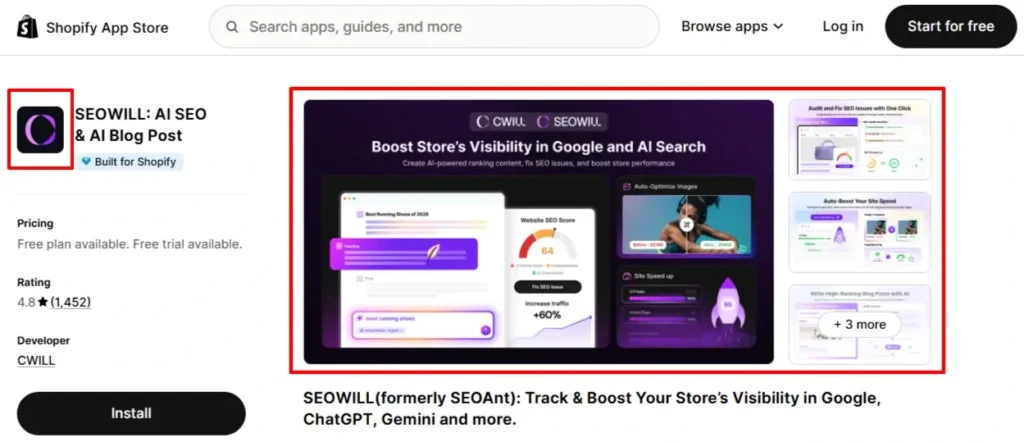
When any merchant lands on your Shopify app listing page, the first thing they will see is the featured image. This is not just showing your feature list on this image; this image is the key to whether they will install your app or not.
Visuals decide the first impressions of the merchant. And before reading anything, merchants look at your icon, featured image, and screenshots. If they feel outdated or confusing, users assume the app is low quality and skip it instantly.
So, use clean designs and simple layouts. Show real dashboards, results, and step-by-step flows. Add short captions to explain each screen. And a quick demo video that builds trust faster because people understand your app in seconds.
Write High-Converting Descriptions
Many founders treat Shopify app listing page descriptions like their app documentation. That’s a mistake. Merchants don’t care what technology you have used or how complex it is; they don’t even read long technical jargon.
They just quickly scan. If your message feels boring or complex, they leave and check the next app.
So, focus on benefits, not features. Explain what problem you solve and what results they will get. Use short sentences, bullet points, and clear language. When your copy sounds human and helpful, trust increases, and conversions grow naturally.
Reviews & Ratings Strategy
In the Shopify App Store, reviews and ratings are so important. Merchants trust other merchants more than marketing copy. Even a great app struggles if ratings are low or feedback looks negative. Because people always check reviews before installing any app on their store.
Reviews are not just social proof that builds trust; they are also a big ranking factor on the Shopify app store. When you have enough good ratings, Shopify will be confident to rank your app higher. Also, merchants will be confident to install and use your app.
Ask your happy users for feedback at the right moment, like after a successful result. Respond politely to every review, even bad ones. When merchants see active support and real experiences, they feel safer choosing your app.
Note: If you have a new app, you may receive many proposals for paid reviews; never fall for their trap. This is unethical, and Shopify’s algorithm will archive those reviews. Be authentic, be original.
Shopify App Store Ads Strategy
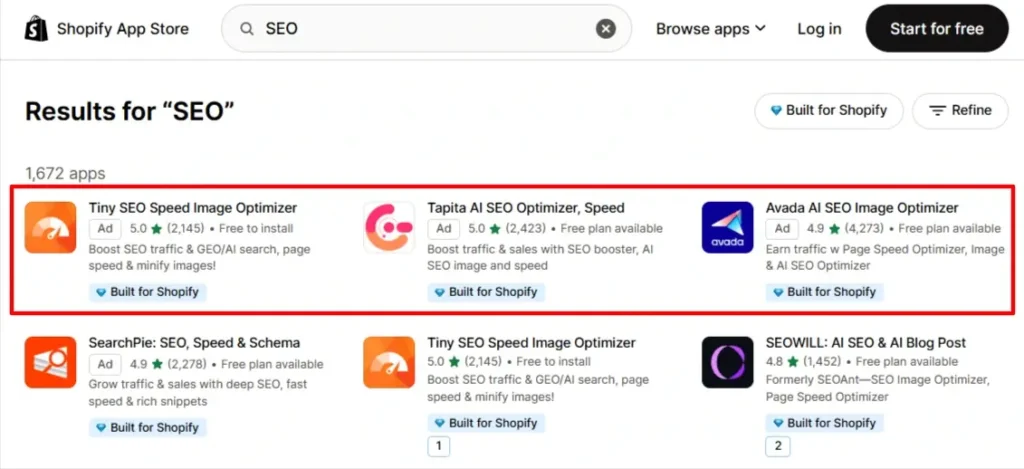
Before running any paid campaign, you need to optimize the Shopify app store listing page. Once you have optimized for relevant keywords, you will get a better position at lower bids.
As you know, organic traffic takes time. Shopify Partner Ads help you grow faster with minimum investment. Shopify App Store Ads place your app directly in front of merchants who are already searching for solutions. That means higher intent and better conversion compared to social ads.
Definitely, I will discuss more about the Shopify App Store ads in the “Paid Marketing” section of this blog. Just I wanna inform you right now that ads work best when your listing is already optimized, because good ASO turns paid clicks into real installs.
Content Marketing Strategy for Shopify App Growth (SEO + Authority)
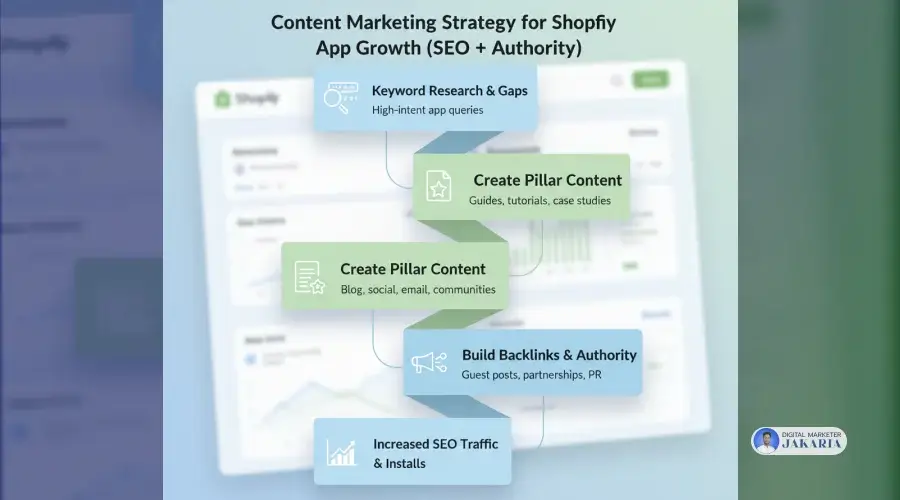
Content marketing for Shopify apps is how you get traffic without paying for every click (ads). Instead of paying and chasing installs daily, you should build assets that dominate on Google, YouTube, and AI search. And those assets bring merchants to your app automatically. It will be possible only when you do strategic content marketing.
For Shopify apps, this means blogs, guides, videos, community support, and documentation. Each piece answers real merchant questions. That’s why, over time, your brand becomes trusted. And trust turns readers into your app users. That’s how content compounds growth month after month.
Why Content Marketing is the Core of Shopify App Marketing
Most Shopify apps depend only on the App Store. But that’s risky. Because there are too many competitors launching new and innovative apps every week. Also, merchants’ buying behaviours are changing too fast.
They are using Shopify sidekick to choose the best app. They are watching for YouTube reviews, using ChatGPT to find the best app for them, and discussing on community.
Here, content marketing gives you all the strong channels that you fully control. So, why are you still depending solely on the app store?
When merchants find your blog first, they already trust you before seeing your app. That makes conversion easier. Instead of promoting your app aggressively, you can educate merchants. Education builds authority. Authority drives installs without aggressive promotion.
SEO Blog Strategy for Shopify App Marketing
SEO is one of the most profitable content marketing strategies to help you rank for thousands of keywords your app listing cannot target. Merchants search for questions like “best upsell strategies” or “how to increase AOV.” These searches rarely happen inside the App Store.
So if you create helpful blogs and guides around those topics, you will win. Add examples, screenshots, and practical steps on how Shopify stores are winning. Then, naturally, introduce your app as the solution to their store’s problems. I’ve seen blogs alone bring consistent installs every month without any ad spend.
Landing Pages for Features & Use Cases
Remember that only blog posts may not be enough to bring your expected installs or SEO visibility. And your brand’s homepage cannot explain everything about your app.
There are different merchants with different needs. Maybe one merchant wants bundles, another wants discounts, and the third wants automation. If your app can serve all of these solutions, you can create dedicated landing pages to speak directly to each use case.
Here I would like to mention a story from the book “How I Create Growth Hacking Plans” by Aladding Happy. The writer mentioned that a brand with 40 dedicated landing pages grown 800% better than those that have only one landing page.
You may create one page per feature or problem. Optimize each with specific keywords. Show benefits clearly. Add visuals and proof. These focused pages rank faster and convert better because the message feels tailored, not generic.
Comparison & Alternative Pages/Blogs
Merchants often compare similar apps before installing them in their stores. Sometimes they compare on the app store, sometimes they want to look for a detailed review or comparison from external sources.
They search things like “App A vs App B” or “best alternative to X.” These users already have buying intent. They are close to installing something; they just need clarification on which app is best for them.
If you write detailed comparison blogs or create dedicated pages on these topics, you can easily convert them. Remember to provide honest comparisons and your unique value. Show strengths and differences from other apps. Explain who your app is best for and why.
This transparency builds trust and often wins highly qualified users, and they will install your app.
Case Studies and Customer Success Stories
Nothing sells better than real results. Merchants don’t care about features. They care about outcomes. They want proof that your app actually increases sales, saves time, or reduces costs.
So you can share real stories with numbers. Show before-and-after results. Include screenshots and quotes. When people see another store succeeding with your app, they imagine the same results for themselves. That emotion drives installs faster.
AI Search & AEO Optimization
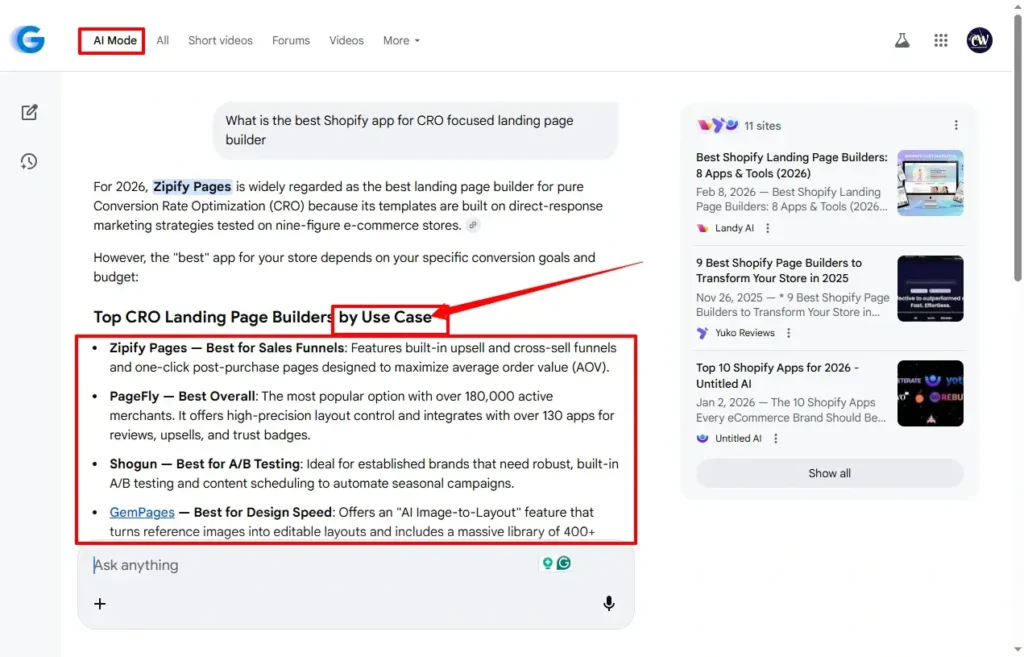
You know that the search behaviour is shifting from traditional Google search to personalized AI assistance. Merchants now ask ChatGPT, Gemini, or Perplexity to solve their problems and search for apps.
If your content isn’t optimized for AI answers, you miss this growing traffic source.
So, write clear, structured content, with proper schema markup, and make it LLM accessible. Use simple explanations and direct answers, add FAQs and step-by-step guides.
AI tools prefer content that is structured, unique, valuable, digestible, and easy to understand. When they cite your brand and app, you gain instant credibility and installs!
Thought Leadership as a Shopify App Marketing Strategy
According to research in 2026, 97% B2B marketers believe that thought leadership and original research is crutial for B2b marketing. Yes, I implemented the thought leadership and benefited from this powerful way of marketing.
Thought leadership makes you more than just another app. You become a guide who helps the hero (merchants) to achieve their goal. Merchants start following your insights, not just your product. This builds long-term trust and brand loyalty.
Share real experiences, experiments, and lessons. For example, if you have an order management app, you will have data on which customer types cancel orders the most. Which customer segment is giving the highest AOV, etc.
Collect these data and create a case study, research paper, newsletter, emails, and post on LinkedIn or social media. Teach what you’ve learned while growing apps. When people see your expertise consistently, choosing your app feels more natural and safe.
Video Marketing Strategy for Shopify Apps (YouTube, Shorts & Demos)
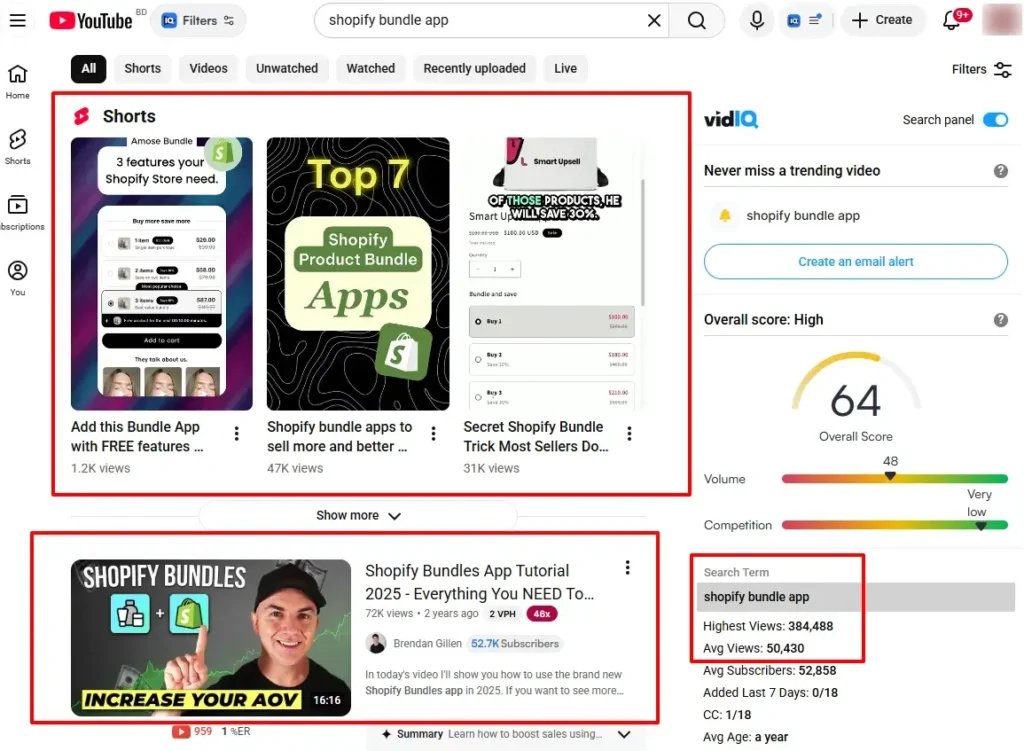
Video helps merchants to understand your app faster than text. Many store owners prefer watching videos to reading long blog posts or guides. A short demo can explain your value in 60 seconds.
When merchants get more value in a short time, they will be educated quickly. And when they understand how your app can help them, they will install it.
Video marketing also builds trust and authenticity for your app. Seeing your real dashboard, workflow, and results feels more believable than screenshots. Plus, YouTube works like a search engine.
Videos keep bringing traffic for years. One good tutorial can generate installs daily without ads. Let’s explore this marketing channel for your Shopify app in detail:
Long-Form Video Tutorials for SEO Traffic
Long tutorials rank very well on YouTube and Google. Merchants search “how to increase AOV on Shopify” or “how to create bundles.” If your tutorial can guide the merchants the right way, your video appears exactly when they need help.
Create step-by-step guides. Show real examples inside a demo store. And follow the strategy like “help/teach first, sell later“. At the end, naturally introduce your app as the easiest solution. Helpful videos convert better because viewers already trust you.
Shorts, Reels, and TikTok for Awareness
When long-form video tutorials help you reach high-intent potential merchants, short-form videos help to raise brand awareness. Nowadays, everyone scrolls on Facebook, Instagram, TikTok, or YouTube Shorts for a few hours every day. And these full-screen short-form videos can grab attention fast.
You can share quick tips, hacks, case study or results that can stop the scroll and spark curiosity. These platforms are perfect for awareness and brand visibility.
Share 30–60 second tips like “3 ways to increase AOV” or “one-click upsell trick.” Keep them simple and practical. Over time, people recognize your brand. When they need a solution, they remember your app first.
Demo & Onboarding Videos
Many installs fail because users feel confused. They open the app and don’t know what to do next. A clear onboarding video removes that friction and helps them to explore value quickly.
You can add a short walkthrough for each key feature. And show exactly where to click, then what happens next. This reduces support tickets and increases activation. When users get results faster, they stay longer and leave better reviews.
Repurposing Video into Blog & Social
One video can become many content pieces. Don’t create content once and forget it. Repurpose it. This saves time and multiplies reach across platforms without extra effort.
Turn tutorials into blog posts, clips into Shorts, quotes into LinkedIn posts, and screenshots into guides. This system keeps your marketing consistent. More touchpoints mean more trust, and more trust means more installs.
Partnership & Ecosystem Marketing for Shopify Apps
The Shopify ecosystem is like an ocean. You have unlimited opportunities for fishing for different types of fish. This is full of agencies, developers, and other apps already serving your ideal merchants.
Instead of trying to grow your Shopify app alone, you can get the support of those giant fish. Smart partnerships help you borrow their trust and reach customers faster without spending heavily on ads.
Let’s discover all opportunities in detail, and how to collaborate with them:
Partner & Agency Collaborations
Shopify agencies build stores, doing marketing, or optimizing conversion rate every day. They use and constantly recommend tools to their clients. If your app solves a real problem, agencies can become your biggest growth channel.
First, you need to reach out to agencies with a win-win, beneficial offer. Properly explain how your app can help the agency and the agency’s clients to save time and money.
Then offer a free plan (test charge) on development stores, priority support, or revenue sharing. When your app improves results, agencies naturally promote you without being asked repeatedly.
I know many Shopify apps have hundreds of Shopify agencies in their partner list. Yes, it takes time to build relationships with agencies, but it isa very effective marketing strategy for your Shopify app. Agency partnership can bring hundreds of installs every month for free.
Affiliate Programs
Affiliate programs turn happy users, freelancers, and content creators into app promoters. Instead of paying upfront, you only pay when you get real installs or revenue. This makes it low risk and highly scalable for your Shopify apps.
Give affiliates a simple dashboard, clear commission, and ready-made marketing materials. Bloggers, YouTubers, freelancers, and Ecom consultants love recurring commissions. Over time, they create reviews and tutorials that keep sending you users automatically.
App-to-App Co-Marketing Campaigns
Co-marketing means promoting together instead of separately. For example, you and another app target the same merchants but solve different problems. In this situation, you can collaborate with another app who are targeting the same merchants and promote each other.
You can create cross-promotions in placements like:
- In-App Dashboard Banner.
- In-App Dashboard Partner Section.
- In-App Dedicated Recommendations Page.
- Featured on website homepage.
- Featured on website partner page/section.
- Website pop-up, sticky notification, or banner.
- Guest Blog Posting.
- Backlink Exchange.
- Featured on Newsletter or Email Campaign.
- Video Tutorials, Cross-Promotions, etc.
This makes collaboration easy and natural, not competitive. And you split the effort and double the reach. Merchants trust educational content more than ads, so co-marketing often drives higher-quality installs.
Integration Marketing
Shopify apps rarely work alone. Most merchants use multiple tools together. If your app integrates with popular apps, you instantly become more useful and visible to their users.
I have integrated our app, Essential Grid Gallery, with the GemPages landing page builder. And getting 5-10 installs per month, totally for free, with 0 effort. When a merchant is building a landing page, they might also be interested in adding a gallery or showing a portfolio. So, we are getting installation consistently.
When two apps promote each other, both sides win. Shared audiences mean faster installs and stronger credibility.
Community & Trust-Based Shopify App Marketing
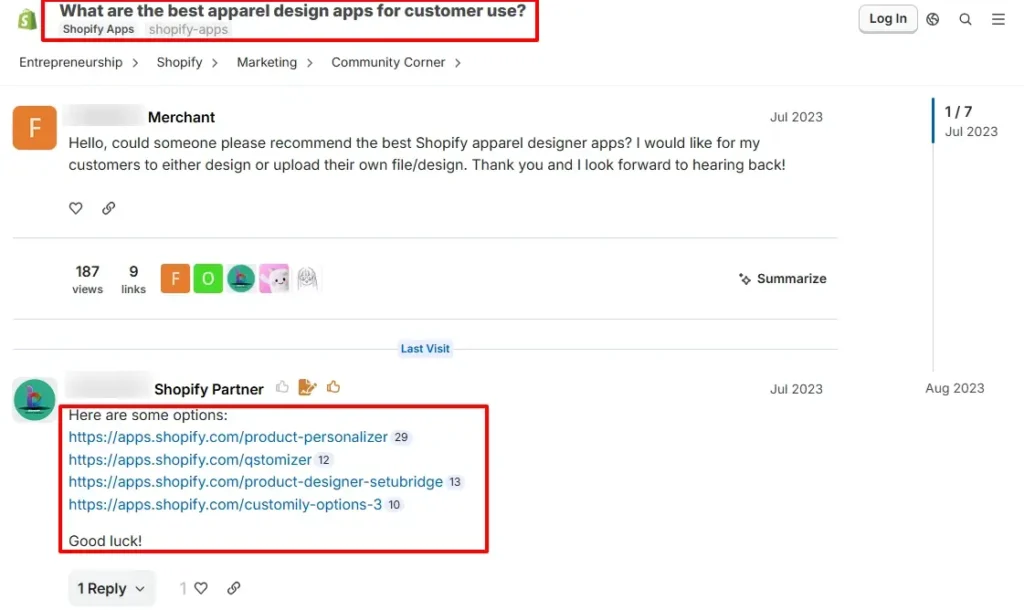
There are a lot of Shopify agencies and apps, including your competitors are targeting the same merchants for marketing. But many merchants don’t believe in your marketing materials or ads.
They need proven ways or methods to solve their problems. That’s why they go to communities like Facebook groups, Subreddits, the Shopify community, etc. So that they can find someone who really faced the same problem, and solve it.
If you can position your brand or yourself as an expert in their community, you will win. When people see real discussions around your app, it feels more authentic and less sales-driven.
Let’s see how you can make your brand helpful inside communities to drive natural installs!
Shopify Community Forums
The Shopify Community forums are full of merchants asking daily questions. Many of those questions relate directly to problems your app solves. This creates a natural opportunity to provide value.
Instead of pushing your app everywhere, you show up consistently, answer questions, and let credibility build over time. Don’t spam your link. First, explain the solution clearly. Then, if relevant, mention your app as one option. Helpful answers build authority, and merchants often check your profile and install later.
Reddit, Facebook Groups & Quora
Platforms like Reddit, Facebook groups, and Quora host honest discussions. Merchants openly share their struggles and seek recommendations. These platforms reward real advice, not aggressive promotion or marketing.
Join conversations regularly on topics related to your Shopify app. Share insights, examples, and practical steps on how other merchants are solving their problems. Over time, people start to recognize your name or brand. When someone asks for tool suggestions, others may even recommend your app.
UGC & Merchant Stories
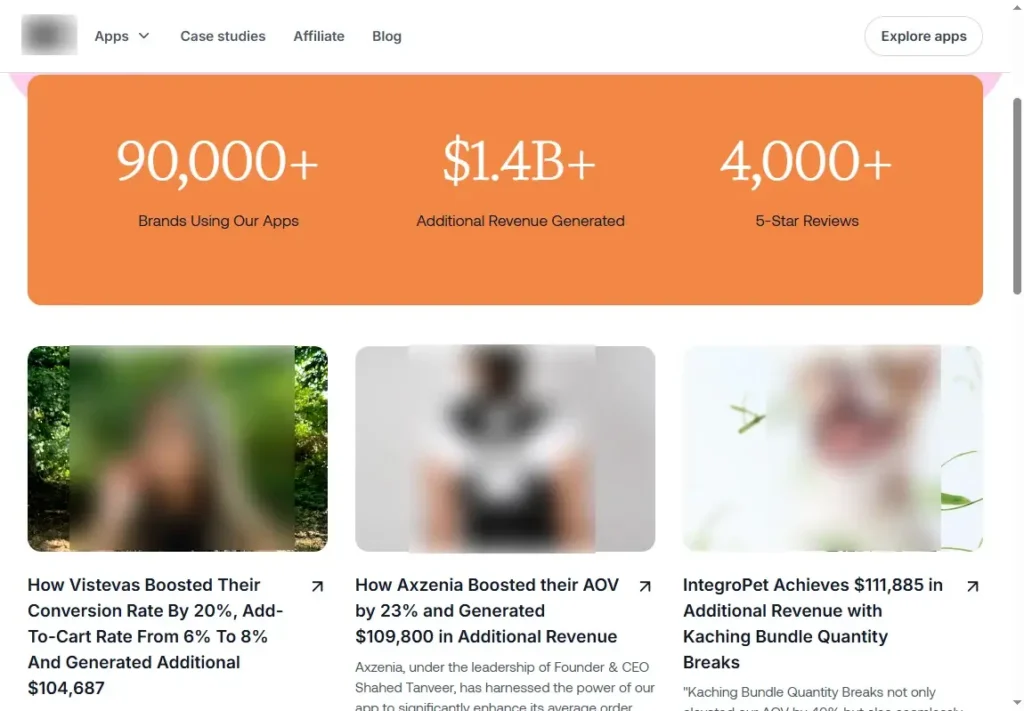
User-generated content feels more authentic because it is real. When merchants share their experience using your app, it carries more weight than any marketing copy you write.
Encourage users to share screenshots, results, or short reviews on social media. Feature their posts on your website and demo stores as inspiration. Seeing real stores succeed with your app builds emotional trust and motivates new users to try it.
Social Proof & Testimonials
Social proof reduces hesitation. Before installing, merchants want reassurance that others are happy to use your Shopify app. Testimonials, ratings, and quotes give that confidence instantly.
Display testimonials clearly on your landing pages. Highlight measurable results whenever possible. Short, specific reviews convert better than long generic praise. Strong proof can turn a curious visitor into an install within minutes.
Demo Store & Live Proof
Words can explain features, but live proof builds belief. A public demo store shows exactly how your app works in a real environment. Merchants can see it in action.
Create a demo store with clear examples and visible results. Add links to key features. When users explore it themselves, doubts disappear. Seeing real implementation makes your app feel reliable and trustworthy.
Conversion Rate Optimization Strategy (Turn Visitors into Installs)
Shopify app store is your landing page for the Shopify app. If your app listing page is not conversion-friendly and well-optimized, you can convert any visitor.
You will burn thousands of dollars on Ads or other marketing activities, but ultimately, you will have no installs. If visitors don’t install your app, your marketing efforts go to waste.
That’s where you need to focus on conversion rate optimization of the landing page. Focus on improving how many visitors actually click the install button.
Small improvements can make a big difference. Better copy, stronger visuals, and clearer proof increase confidence. When merchants clearly understand the value, they decide faster. Clear messaging removes confusion, and confusion always kills conversions.
Here are some tips to optimize your app’s conversion rate.
Benefit-Driven Copy
Most app founders are technical people, and they talk too much about technical features. But merchants don’t care about technical details first. They care about results. Your copy should explain how their store improves, not how your system works.
Instead of saying “advanced automation engine,” say “save 5 hours every week.” Make benefits clear and specific. When merchants see a direct impact on revenue or time, they immediately understand why they should install.
Feature Bullets That Sell Outcomes (Results)
Feature lists are important, but they should highlight outcomes. Each bullet should answer one question: “What does this do for me?” If merchants don’t understand the benefit clearly, the feature feels unimportant and noisy on the listing page.
Write short, powerful bullets. Focus on revenue growth, time savings, or ease of use. Outcome-focused bullets are easier to scan. Busy merchants read quickly, so clarity increases both engagement and installs.
Pricing Psychology (Free vs Freemium vs Trial)
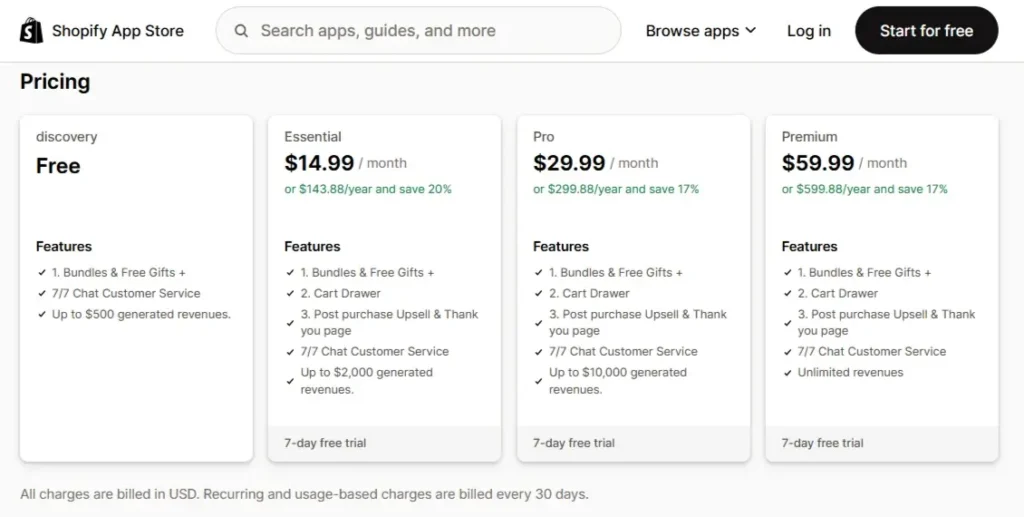
Pricing affects conversion more than most founders expect. A free plan or free trial removes risk. A free trial reduces hesitation. Freemium builds long-term user pipelines. The right model depends on your app’s complexity and value.
Keep pricing simple and transparent. Avoid confusing tiers. Clearly explain what users get at each level. When pricing feels fair and easy to understand, merchants are more comfortable clicking install.
Visual Storytelling for Conversion
The main feature image and screenshots should tell a story. Don’t just show dashboards randomly. Show a clear journey of what problem you can solve through your app. Then highlight the results that merchants are going to achieve. This makes your app easier to understand quickly.
Highlight key benefits inside screenshots with short captions. Use real examples instead of empty demo data. When merchants can imagine using your app in their store, conversion naturally increases.
Trust Signals & Reviews
Trust removes doubt. Reviews and ratings show that other Shopify merchants already trust you. This reduces fear of making the wrong decision.
Try to achieve positive reviews on your Shopify app listing and video reviews on the website landing pages. Highlight measurable results and case studies whenever possible. Even a few strong testimonials can significantly improve conversion because merchants rely heavily on social proof.
Paid Shopify App Marketing Strategies That Scale Fast
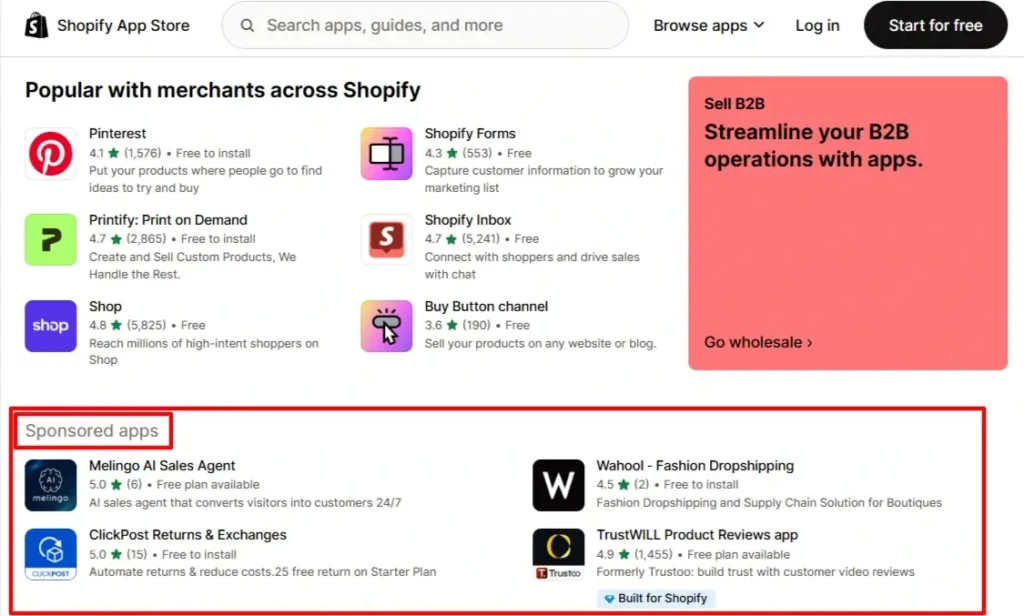
Now I’m going to talk about the most important part of your Shopify app marketing. You must know before investing thousands of dollars in ads.
Paid marketing helps you grow faster than organic methods alone. Instead of waiting months for SEO, you can generate installs immediately. But you have to target the right merchant, profitable keywords, and optimize regularly to scale.
Another important thing you need to understand is customer lifetime value (CLV). When numbers make sense, paid marketing turns into a growth engine, not an expense.
Here are a few profitable and proven platforms for Shopify app paid marketing:
Shopify App Store Ads
Shopify App Store Ads place your app at the top of relevant searches. This is very powerful because merchants are already searching with buying intent inside the App Store. So, you can reach them at the exact decision moment with Shopify partner ads.
Start with high-intent keywords related to your core feature. Monitor cost per install closely, and look for paid customers/keywords. Better targeting lowers your customer acquisition cost and makes campaigns more profitable.
Google Search Ads
The second most profitable advertising platform is Google Search Ads, thet help you capture traffic outside the App Store. Many merchants search for solutions directly on Google before exploring apps. This gives you access to broader and earlier demand.
Target keywords like “best Shopify upsell app” or “how to increase AOV.” Send traffic to optimized landing pages, not generic website homepages. Strong alignment between keyword and page increases quality score and lowers ad costs.
- Pro Tip: Connect your Google Ads with GA4 or BigQuery to feed Google with exact customers. Then Google will send you more accurate merchants who need your app.
Retargeting Campaigns
Most visitors do not install on their first visit. Retargeting brings them back. These campaigns show ads to people who already visited your website or App Store listing.
Retargeting is usually cheaper and converts better. The audience already knows your brand and your app. Use reminder messaging, testimonials, or limited-time offers. Staying visible increases the chances they finally install.
Affiliate & Influencer Marketing
Affiliates and influencers promote your app to their audience. Instead of paying only for clicks, you often pay per install or revenue share. This reduces upfront risk for early-stage apps.
Choose partners who focus on Shopify education or eCommerce growth. Authentic reviews work better than scripted promotions. When trusted creators recommend your app, merchants will feel like recommendations, not promotions.
Budget Strategy for Early Apps
Early apps should start small and test carefully. Don’t spend heavily before understanding conversion rates and retention numbers. Paid growth works best when fundamentals are strong.
Set a clear monthly test budget. Track cost per install and lifetime value closely. Scale only campaigns that show positive returns. Controlled testing prevents wasted spend and builds a sustainable growth system.
Retention Marketing Strategy for Shopify Apps (Increase LTV & Revenue)
Getting installs is important, but retention drives real revenue. If users uninstall after a few days, growth becomes expensive and unstable. Strong retention increases lifetime value and makes paid marketing profitable.
When users stay longer, they upgrade more often and leave better reviews, which help them rank higher and become trusted. Retention is not random; it requires structured onboarding, education, and continuous delivery of value. Happy users become long-term customers and promoters.
Onboarding Emails
The first few hours or days decide whether the merchant will use your app or not. If users don’t understand your app quickly, they lose interest. Here, onboarding emails can guide them step by step and highlight early wins.
Send simple, action-focused emails. Show what to set up first and why it matters. When users see quick results, confidence increases. Early success reduces drop-offs and improves long-term retention.
In-App Education
Many users skip documentation. They prefer learning inside the app while using it practically. In-app tooltips, checklists, and guided tours reduce confusion and improve activation.
Show small instructions at the right moment. Avoid overwhelming users with too many steps at once. Clear guidance helps users unlock full value, which increases satisfaction and lowers churn.
Upgrade Nudges
Free users often need reminders about premium benefits. Upgrade nudges should feel helpful, not aggressive. Show value before asking for payment.
Highlight features that unlock more revenue or automation. Use data-driven prompts like usage limits or performance improvements. When users see clear benefits, upgrading feels like a smart decision.
Churn Reduction
Churn happens when users don’t see enough value or find your app too complex to use your app. Sometimes they face technical issues or errors. Sometimes they forget about the app. Monitoring behavior helps you identify at-risk users early.
Send re-engagement emails or offer quick support when activity drops. Ask for feedback before cancellation. Understanding why users leave helps you fix problems and improve overall retention.
Review Generation Systems
Happy users rarely leave reviews unless asked. A structured review system increases ratings naturally. Higher ratings improve App Store visibility and conversion.
Ask for reviews after users achieve success, not immediately after install. Timing matters. Automate polite reminders inside the app. Positive reviews strengthen trust and support long-term growth.
Weekly Shopify App Marketing Audit & Growth System
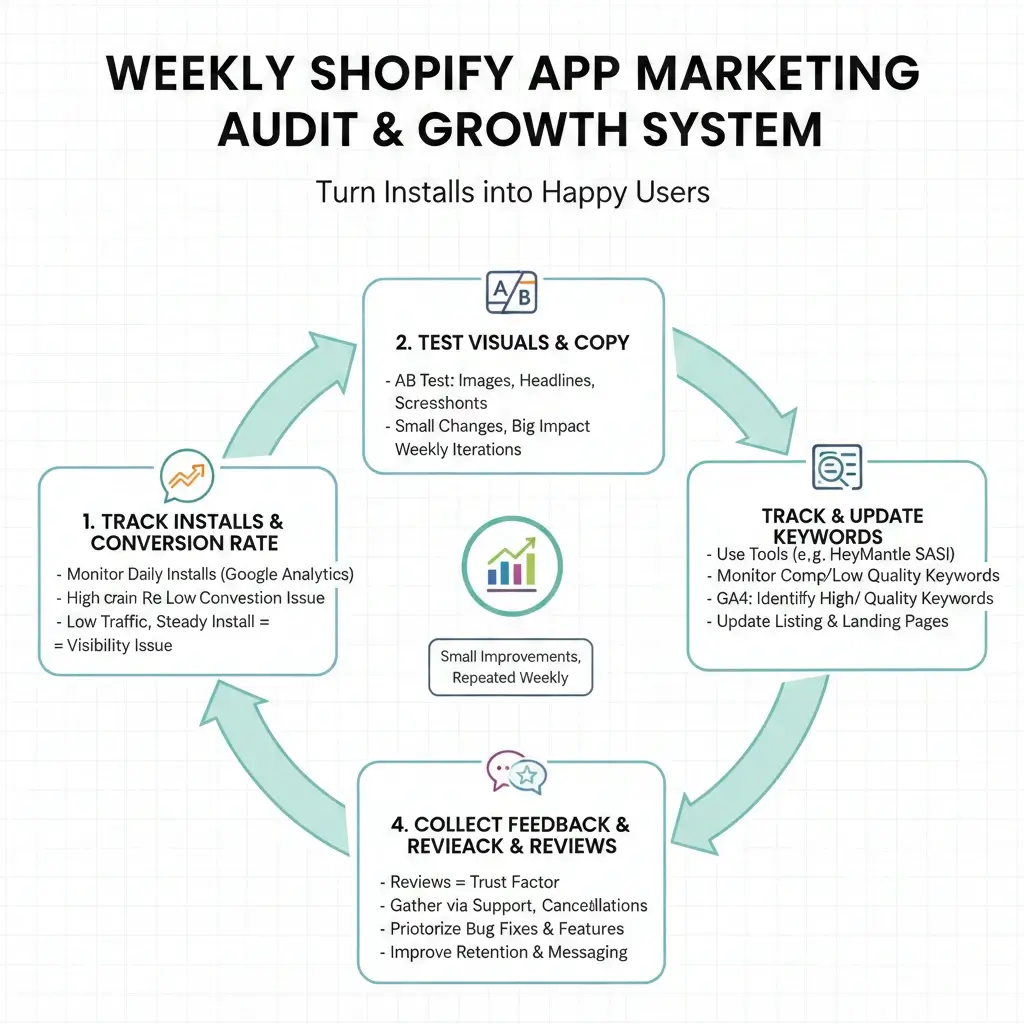
When you know how to market your Shopify app, then user acquisition is not your challenge anymore. Now your main challenge is how to make them happy, so that they will stay and use your app.
Your app growth not only depends on your marketing, but it also depends on how effectively you are optimizing your marketing funnel. Growth is not one big action; it is small improvements repeated every week.
A simple weekly audit system helps you identify problems early and scale what is working. Instead of guessing, you track numbers, test elements, and improve gradually. A structured weekly review keeps your Shopify app marketing predictable and data-driven.
Track Installs & Conversion Rate
Shopify app install is one of the most important events you should track every day. Sometimes, you will see less install, but it doesn’t mean your marketing strategy is not working. It could be that merchants are visiting your Shopify app listing page, but they are not installing the app.
Simply, you can track how many visitors came to your listing and how many installed using Google Analytics. I have often found good conversion rate for the Shopify app is around 25-35%.
That means, if 3 merchants visits on your app listing page, 1 should install the app on average. Your conversion rate shows whether your positioning and messaging are clear.
So, if traffic is high but installs are low, the issue is conversion. If installs are steady but traffic is low, the issue is visibility. Understanding this difference guides your next action.
Test Visuals & Copy
Small changes can increase installs significantly. Test different featured images, headlines, benefit statements, screenshots, and demo visuals. Merchants decide quickly, so first impressions matter.
Run simple A/B comparisons. Change one element at a time. Measure results weekly. Over time, these small improvements compound and raise your overall conversion rate.
Track and Update Keywords
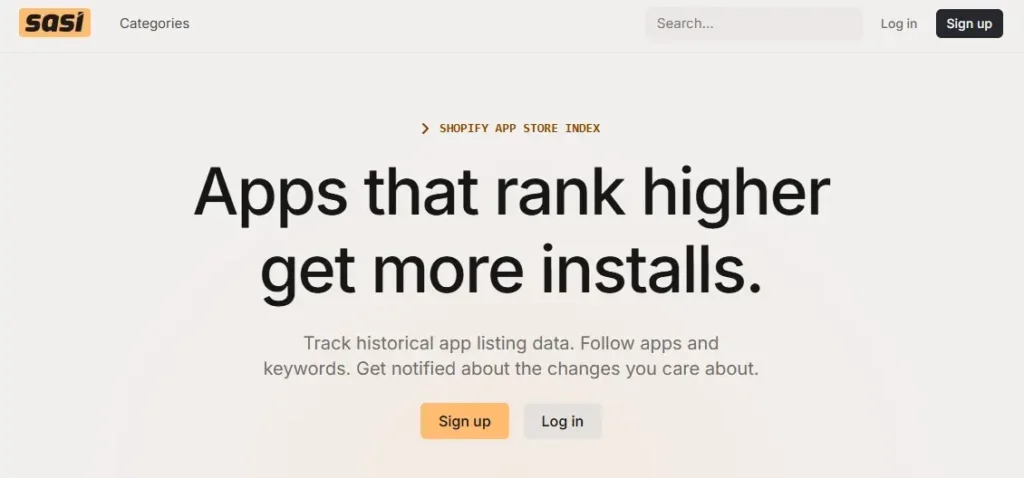
Every day, new apps are coming on the Shopify app store; maybe some of them are your competitors. Also, your existing competitors are consistently trying to outrank your app. So regularly monitoring your app’s keyword visibility is so important.
I use SASI of HeyMantle to track keyword rankings for my Shopify app and my competitor’s apps. You can set a list of keywords to track for different apps, and it will send you an email of ranking updates every day. You don’t need to spend hours checking which keywords are ranking in which position.
Review which keywords drive installs (using GA4) and which ones bring low-quality traffic. Remove low-performing keywords and add new relevant keywords. Update your App Store listing and landing pages regularly. Staying optimized helps maintain visibility and defend your ranking.
Collect Feedback (Reviews)
Reviews are the most effective and important trust factors merchants check before installing any app. So, only focusing on marketing may not be enough to make your app profitable. You should also focus on collecting feedback and reviews.
Feedback reveals blind spots. Reviews, support tickets, and cancellation reasons show where users struggle. Growth is easier when you fix all errors and bugs in your app.
Create a simple system to gather feedback consistently. Categorize all issues, and prioritize improvements based on impact. Listening to users not only improves retention but also strengthens your overall marketing message.
Shopify App Marketing Checklist (Quick Summary Table)
This checklist summarizes the entire Shopify App Marketing strategy into one simple system. Use it as a weekly reference. Growth becomes easier when all channels work together rather than randomly experimenting.
| Growth Area | Key Actions | Goal | Frequency |
| App Store Optimization (ASO) | Optimize title, subtitle, keywords, visuals, reviews | Increase visibility & installs | Monthly review |
| SEO & Content Marketing | Publish blogs, comparison pages, case studies, ranking documentation | Generate organic traffic | Weekly publishing |
| Landing Page Optimization | Benefit-driven copy, outcome-focused bullets, trust signals | Improve conversion rate | Bi-weekly testing |
| Video Marketing | YouTube tutorials, Shorts, demo videos | Drive awareness & education | Weekly / Bi-weekly |
| Paid Ads | App Store Ads, Google Ads, retargeting | Scale installs fast | Ongoing optimization |
| Community Marketing | Shopify forums, Reddit, Facebook groups | Build trust & authority | Weekly engagement |
| Partnerships | Agency collaborations, integrations, co-marketing | Expand reach | Monthly outreach |
| Retention Strategy | Onboarding emails, in-app education, upgrade nudges | Increase LTV | Continuous |
| Review Generation | Trigger review requests after success moments | Improve ranking & trust | Automated |
| Weekly Growth Audit | Track installs, test copy, update keywords, collect feedback | Continuous improvement | Weekly |
Common Shopify App Marketing Mistakes to Avoid
Many Shopify apps fail not because of a lack of features or dev issues, but because the marketing strategy is weak. Founders focus too much on building features and ignore positioning, distribution, and retention. Avoiding these common mistakes can save months of slow or stalled growth.
- Ignoring App Store Optimization (ASO) – No keyword research, weak titles, and unclear screenshots reduce visibility.
- Talking about features instead of benefits – Merchants care about results, not technical terms.
- Running paid ads without tracking LTV – Scaling ads before retention leads to wasted budget.
- No onboarding system – Users install but don’t activate properly.
- Asking for reviews too early – Requesting reviews before delivering value lowers ratings.
- Inconsistent marketing efforts – Publishing or promoting randomly instead of following a weekly growth system.
Avoid these mistakes, and make your Shopify app marketing more predictable, scalable, and profitable.
Conclusion
Now you have finally reached the end of this long-form blog post, “Shopify app marketing.” In this complete blog post, all marketing strategies for your Shopify app growth have been covered. So, I believe, this will be very helpful for growing your app with the strategic marketing activities.
Shopify app marketing is not about running ads for a few weeks or publishing random blog posts. It is a structured system. Visibility brings traffic. Conversion turns visitors into installs. Retention turns installs into revenue. If you can adopt these and work with a combination, growth becomes predictable.
From my experience in app marketing, I have noticed a clear pattern in the Shopify App Store. Apps won’t win when they have a lot of features, even very advanced features. Shopify apps win when you can identify the market demand, market gap, and clear positioning.
I have helped scale organic traffic from zero to thousands of monthly visitors. I have optimized listings that increased app listing page visits and install rates.
I have seen how one small change in messaging can double conversions. Marketing is rarely about dramatic redesigns. It is about continuous, data-driven improvements.
Most founders focus heavily on product development. That is important. But without structured marketing like ASO, SEO, paid acquisition, partnerships, retention systems, and weekly audits — growth stays slow, even stuck. The real advantage comes when you treat marketing as an asset, not an afterthought.
If you implement this full Shopify App Marketing framework and listen to users, your app will not rely on luck. It will grow through strategy.
Would you like to discuss your listing page or marketing funnel gap with me?
FAQs
How to Market Your Shopify App?
To market your Shopify app effectively, you need a mix of visibility, trust, and retention strategies. Start with strong App Store Optimization (ASO) so merchants can find you on the app store. Then build traffic through SEO content, videos, partnerships, and community engagement.
Once your conversion rate is optimized, combine organic growth with paid ads. Focus not only on installs but also on onboarding and retention. Sustainable growth comes from turning users into long-term customers.
How to Rank Higher in the Shopify App Store?
Ranking higher in the Shopify App Store depends on keywords, listing page optimization, conversion rate, and reviews. First, optimize your app title, subtitle, and description with relevant keywords merchants search for.
Then, improve your install conversion rate with better visuals and benefit-driven copy. Finally, build consistent positive reviews. Higher ratings and steady installs signal quality to the algorithm, which improves ranking over time.
Is Content Marketing Worth it for Shopify App Marketing?
Yes, content marketing is one of the most powerful long-term strategies for Shopify app growth. Blogs, comparison pages, and case studies attract merchants who are actively searching for a solution.
Content builds authority and trust before users even visit your App Store listing. Unlike paid ads, SEO traffic compounds over time. Strong content also supports retargeting, email marketing, and brand credibility.